
Flarebreak Logo

The Flare Cabinet: What to Have Ready Before the Next Flare

Flares build over hours, usually starting at night. A small kit assembled in advance means the next one starts with a plan instead of a search.

The case for preparing is arithmetic. The NHS2 puts an untreated attack at one to two weeks, while prescribed flare medicine taken early should start working within two days. Most of that difference is decided in the first hours, and the first hours usually happen at 2 a.m., in pain, which is a bad time to locate medicine, remember instructions, or shop. The kit moves all of that work to a calm afternoon.
What Goes in the Cabinet

Five items, in order of importance. The first one is free.

1. A written flare plan

Agreed with your clinician before you need it: which medicine to take when a flare starts, how much, and when to call instead of treating at home. The NHS self-care list begins with taking prescribed medicine as soon as possible2, which requires having decided in advance what that medicine is. A useful question for your next appointment: “If I flare on a Saturday night, what exactly do I do?”

2. The cold layer

A pliable cold pack that lives in the freezer, a backup bag of peas, and a towel that belongs to the kit. Cold is the one comfort measure with guideline support during flares1; technique and pack selection are covered in the cold therapy guide.

3. Footwear for a swollen foot

Something wearable out of the house at peak swelling, usually a post-op shoe, plus non-binding socks that do not leave a pressure ring above the joint. Details in the shoes and socks guide.

4. Water within reach

The NHS advises drinking plenty of water during an attack unless a clinician has said otherwise2. A bottle by the bed, plus a spare pillow for keeping the foot raised, covers it.

5. A record

Start time, which joint, and what the day looked like. A flare history sharpens every later conversation with your clinician, particularly the one about lowering uric acid. A notes app works; the Flarebreak app is built for it.

The Flare Cabinet Card

A one-page version for the freezer door or the inside of a cabinet, kept deliberately short.

The Flare Cabinet Card

flarebreak.com

When a flare starts

  1. Take the flare medicine you agreed with your clinician, as soon as possible.
  2. Rest, and raise the foot on a pillow.
  3. Cool the joint: ice pack or frozen peas, wrapped in a towel, up to 20 minutes at a time.
  4. Drink lots of water (unless your clinician has told you otherwise).
  5. Keep pressure off: loose socks or none, no tight shoes, bedclothes off the joint at night.
  6. Log it: start time, which joint, what the day looked like.

Keep stocked

  • Pliable cold pack in the freezer (plus backup peas)
  • A towel or cover for the pack
  • Post-op shoe or wide soft slide
  • Non-binding socks
  • Water bottle within reach of the bed
  • Your written flare plan and the medicine it names

Get urgent medical help if

the pain is getting much worse, or you also have a very high temperature, or you feel sick and cannot eat. A hot, swollen joint with fever can be an infected joint, which is an emergency.

Comfort guidance, not medical advice. Your clinician's flare plan comes first. Sources: NHS gout self-care; 2020 American College of Rheumatology Gout Guideline.

Updates

Products get retested and guidance gets revised. Leave an email to hear when this page changes, and when the Flarebreak app launches.

No spam, no selling your address, unsubscribe anytime.

The Cabinet Does Not Prevent Flares

A good kit shortens and softens flares; it has no effect on how often they come. Flare frequency is set by uric acid, which is mostly genetic. The approach with strong guideline support is treat-to-target: lowering uric acid with medication to below 6 mg/dL and keeping it there, so crystals dissolve and flares stop1. If flares are a recurring part of your life, that is the conversation to have with your clinician.

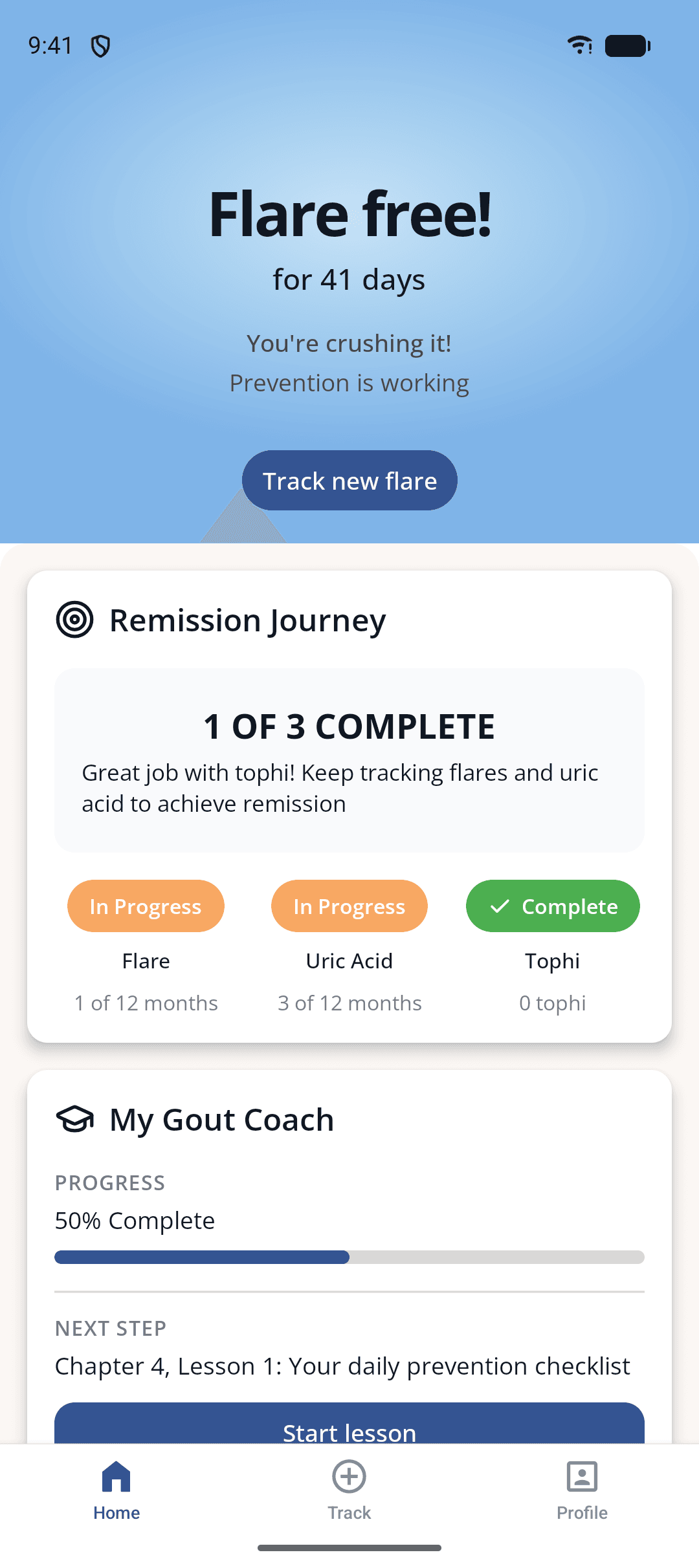
Flarebreak home screen: 41 days flare-free, with Remission Journey and Gout Coach progress

The digital half of the cabinet

Log flares the moment they start, follow the Flare Protocol through the worst of it, and track uric acid toward the under-6 goal.

Join the waitlist

Free to start. iOS & Android. Your health data is never sold.

Frequently Asked Questions

Per the NHS, an untreated attack usually lasts one to two weeks, and untreated future attacks can last longer. Prescribed flare medicine taken early should start to work within two days. The difference between those two timelines is mostly decided in the first hours, which is what the flare kit is for.

The NHS self-care list: take any medicine you have been prescribed as soon as possible, rest and raise the limb, cool the joint with a wrapped ice pack or frozen peas for up to 20 minutes at a time, drink plenty of water unless a clinician has told you otherwise, and keep pressure, including bedclothes, off the joint.

Whatever you and your clinician have agreed in advance. Flarebreak does not prescribe or dose. The useful step is agreeing a written flare plan at a routine appointment, before it is needed, and keeping the medicine it names in the kit.

Seek urgent medical help if joint pain is getting much worse, or if you also have a very high temperature or feel sick and cannot eat. A hot, swollen joint with fever can be an infected joint rather than gout, and that needs same-day attention.

References

1: FitzGerald JD, et al. 2020 American College of Rheumatology Guideline for the Management of Gout. Arthritis Care Res. 2020 Aug;72(8):1187. doi: 10.1002/acr.24401. Link to full text.

2: NHS. Gout. nhs.uk. Link.

Comfort gear, not treatment; nothing here lowers uric acid. Links are plain links with no affiliate tags. How we choose.