
Flarebreak Logo

Shoes and Socks for Gout

Pressure makes gout pain worse, and most footwear applies it by design. What matters in a flare shoe, why sock elastic is a problem, and what we wear.

A flare can put a foot a full size past its shoes overnight, at exactly the spot that tolerates contact least. Forcing a normal shoe onto a flaring foot is not a solution, and neither is staying home for a week. The workable answers are cheap and specific.

Why Shoes Hurt During a Flare

During a flare the joint capsule is inflamed, the skin over it is stretched tight, and the local nerves are sensitized, so light contact registers as pain. The NHS guidance reflects this directly: do not put pressure on the joint, and at night keep bedclothes off it2.

Shoes add motion to the contact problem. A normal step ends by bending the toes upward, folding the foot at the big-toe joint, which is where most flares sit. Flare footwear has two jobs: touch the joint as little as possible, and let the foot move without bending it.

What Matters in a Flare Shoe

The Picks

One for peak swelling, one for the days after, and socks that do not fight the ankle.

Vive Post-Op Shoe

$Hands-on tested

Getting out the door at peak swelling, when no shoe you own will go on.

Why we picked it
The straps open completely flat so a swollen foot lowers in from above, the toe area is wide and open, and the stiff rocker sole lets you take a step without bending the big-toe joint. Medical supply stores and many pharmacies carry post-op shoes, so it can often be bought same-day for around $15 to $25.
What it won't do
The stiff sole takes a short walk to get used to, and it looks like a medical shoe. It protects the joint from footwear and stride; it has no effect on the flare itself.
Skip it if
The sole adds height on one side, which is a tripping consideration if your balance is uncertain. Not suitable for driving.
Vive HealthAmazonMedical supply stores and larger pharmacies, often same-day

No affiliate links. Last reviewed 2026-07.
OOFOS OOahh Slide

$$Hands-on tested

Soft footing for the tail of a flare and the tender days after.

Why we picked it
The foam absorbs impact before it reaches the foot, the footbed is wide, and the slide construction keeps material off the big-toe joint. Of the recovery footwear we have worn, this is the one we still use.
What it won't do
The strap is not adjustable, so at peak swelling it may not fit; that phase belongs to the post-op shoe. Cushioning changes how a step feels, not how the flare behaves.
Skip it if
It only covers the commute and the evening if work requires a closed shoe. If you have footwear advice from a medical fitting, follow that instead.

No affiliate links. Last reviewed 2026-07.

Sockwell Relaxed Fit Socks

$$Hands-on tested

A sock that stays up without becoming a tourniquet above a swollen ankle.

Why we picked it
The top holds by being wide and loosely knit rather than by gripping, so there is no elastic ring above a swollen joint. The toe seam is flat, which matters when the big toe is inflamed, and the merino blend runs less clammy than cotton on a hot foot.
What it won't do
Not compression socks, deliberately; pressure makes gout pain worse. The wool blend can run warm in summer.
Skip it if
A prescribed compression regimen for another condition overrides this advice; ask your clinician how to handle flare days. Any sock sold as non-binding or diabetic-friendly shares the key feature, including cheaper options.

No affiliate links. Last reviewed 2026-07.

Comfort gear, not treatment; nothing here lowers uric acid. Links are plain links with no affiliate tags. How we choose.

Socks: Avoid the Elastic Ring

Standard sock elastic leaves a pressure ring above a swollen ankle, applying exactly the kind of constant squeeze a flaring joint cannot afford. Socks sold as non-binding or diabetic-friendly hold by being wide and loosely knit at the top instead of gripping. A flat toe seam matters too when the big toe is inflamed.

On the worst days, no sock is a reasonable choice. The NHS makes the same point about bedding: keep bedclothes off the affected joint at night2.

What to Skip

Toe-post sandals anchor a strap directly beside the big-toe joint. Rigid dress shoes during a flare are not worth forcing. Sizing up a regular shoe mostly backfires: the foot slides, the toes grip to compensate, and gripping bends the joint. And shoes marketed specifically for gout at specialty prices are wide comfort shoes with different labeling; judge them on the features above, not the keyword.

Fewer Flares Comes From Lower Uric Acid

Footwear strategy makes flare weeks manageable; it has no effect on how often they happen. Flare frequency tracks uric acid, and the guideline-supported way to change it is treat-to-target therapy that brings uric acid below 6 mg/dL and keeps it there1. Wherever you currently stand on medication, that decision is worth revisiting with your clinician if flares are still part of your year.

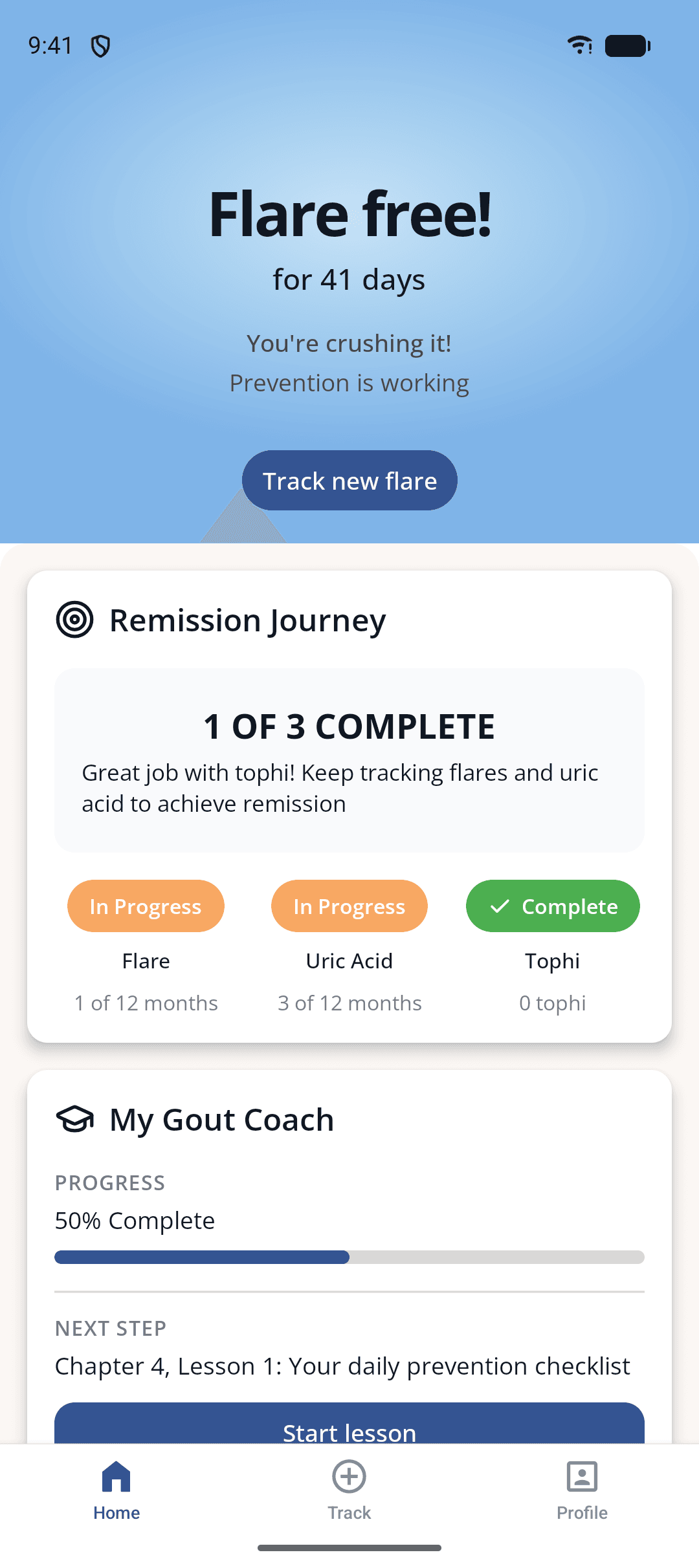
Flarebreak home screen: 41 days flare-free, with Remission Journey and Gout Coach progress

Track flares and uric acid together

Flarebreak keeps your flare history and uric acid readings in one place, for better-informed conversations with your clinician.

Join the waitlist

Free to start. iOS & Android. Your health data is never sold.

Frequently Asked Questions

There is no gout shoe, only features that respect a flaring joint: an opening that adjusts wide enough for swelling, nothing pressing on the big-toe joint, and a stiff sole that keeps the joint from bending with each step. At peak flare that usually means a rigid-soled post-op shoe; in the days after, a soft wide slide. Products marketed specifically for gout are generally wide comfort shoes with different labeling.

Not during a flare. NHS guidance is to avoid pressure on the joint because it makes the pain worse, and compression is pressure. If a clinician has prescribed compression for another condition, such as venous swelling, follow that prescription and ask them how to handle flare days. Otherwise, a flare calls for loose, non-binding socks or none.

NHS advice during an attack is to rest and raise the limb. Flare footwear exists to make the steps you cannot avoid less painful, not to enable normal activity. Ease back in as the flare settles, and ask your clinician if you are unsure what is appropriate for your situation.

The big-toe joint sits where shoes crease, where toe boxes narrow, and where the foot bends at the end of every step. During a flare the joint is swollen and extremely sensitive to contact, so shoes that fit last week stop fitting. The practical response is footwear that removes contact and bend at that spot rather than adding support.

References

1: FitzGerald JD, et al. 2020 American College of Rheumatology Guideline for the Management of Gout. Arthritis Care Res. 2020 Aug;72(8):1187. doi: 10.1002/acr.24401. Link to full text.

2: NHS. Gout. nhs.uk. Link.

Flarebreak home screen: 41 days flare-free, with Remission Journey and Gout Coach progress

Build your flare plan before the next one

The Flare Cabinet checklist, the Flare Protocol guide, and uric acid tracking, together in one app built on published clinical guidelines.

Join the waitlist

Free to start. iOS & Android. Your health data is never sold.